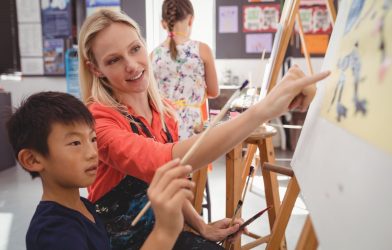



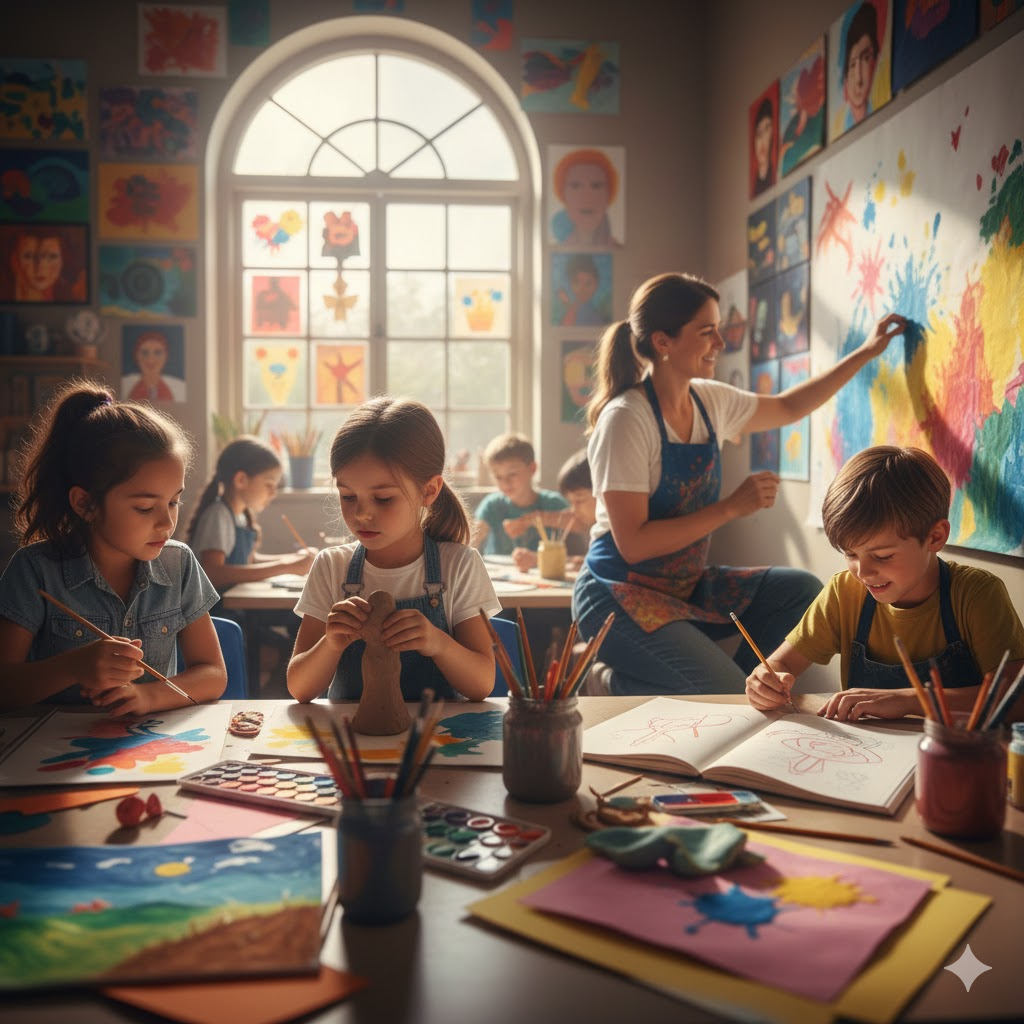
Art education is important in terms of rounding out the students. At the time when creativity is becoming a more prized concept, the issue of art in schools is not only positive, it is a necessity. Art education also increases the learning process by boosting cognitive skills to developing emotional intelligence.
The Multipurpose Value of Arts Education
Improving Creativity and Critical Thinking
Creativity and critical thinking are some of the skills that art education fosters and are unavoidable in the modern world that operates at a very fast pace. A study carried out by Arts Education Partnership indicates that students who participate in arts education programs are better in problem solving and innovative thinking. An example is a high school in California that incorporated a visual arts program, which promoted creating their own stories by use of art. This saw a significant rise in the capacity of the students to think out of the box and have new points of view towards issues.
Developing Emotional Intelligence
Emotional development also depends on art education. Creative activities help students to reveal their emotions, learn more about themselves, and gain skills to empathize with other people. According to research conducted by the National Endowment of the Arts, students that are involved in arts education are more emotionally resilient. Indicatively, a study conducted in one of the New York City middle schools revealed that students enrolled in a performing arts program stated that they felt more connected to their colleagues and teachers, and therefore the school was more supportive.
Enhancement in Academic Performance
The linkage between art education and better academic performance is well-reported. In the studies conducted, it has been demonstrated that students who enroll in arts programs perform better in other subjects like reading, mathematics and science. Indicatively, according to a report by the Arts Education Partnership, the students who have the higher levels of arts participation tend to have higher scores on the standardized tests. The schools which have included art in their curriculum like the Chicago Arts Partnerships in Education have recorded impressive improvement in academic performance of students.
Nurturing Multicultural Understanding
Through art education, students are given an opportunity to learn about various cultures, as well as different points of view. With exposure to different art forms, students are able to learn the history and experiences of other communities and develop a sense of cultural awareness and appreciation. Indicatively, classes like art classes with a multicultural focus allow learners to produce artworks that represent their cultures and encourage inclusivity and tolerance among the school community.
Examples of Successful Art Programs in Real Life
Chicago Arts Partnerships in Education
The Chicago Arts Partnerships in Education (CAPE) is one of the brightest examples of the implementation of art education. It is an initiative that works with schools in order to incorporate arts as part of the core curriculum. CAPE also increases the learning experience of students by collaborating with local artists and arts organizations. Schools, which participated in this program, claimed higher test scores as well as a more dynamic school culture.
High school of art and media of technology
Another model is the High School for Arts, Media, and Technology that is located in California. This school also focuses on the significance of art in education because it enables students to study different forms of art besides excelling in academics. Incorporation of art in the curriculum has created more student interest and reduced dropout rates. Students who graduate from this program have been citing their success to skills and confidence they developed during their art training.
Professional Dynamics of Art Education
Educationists and psychologists have stressed the importance of art in nurturing all rounded individuals. According to Shirley Brice Heath, a prominent sociologist, students who participate in arts record higher chances to excel in their studies as well as in the social front. Her work brings into attention that creativity is not only developed through art education, but also fundamental life skills like teamwork and perseverance are developed.
Likewise, Ellen Winner, a professor at Boston College, has suggested that participation in arts can improve a person’s cognition. According to her, art education will enable the students to become skillful in areas that can be transferred to other subjects and become better learners in general. This highlights the need to promote art subjects in schools, more so in an era where standardized tests tend to dominate the creative subjects.
Dispelling the majority of myths
Although it is evident that art education is beneficial, some people still perceive it as luxurious as opposed to a necessity. Such a myth may result in the decline in the investment and advocacy of art programs. Nevertheless, art education must be taken to be part of a complete education system. It is important that schools support the need to have art in the school curriculum since it teaches the learners to be well-rounded thinkers who can succeed in any environment.
The Future of Art Education
The incorporation of technology and art education is promising a bright future. The emergence of the digital art and online worlds have given students more chances than ever to experiment with their creativity. These tools can be used in schools to improve the art education, make it more accessible and interesting to the students. The programs that incorporate use of traditional arts alongside digital media can equip students with careers in a more digitalized world.
Conclusion
Heralding on this point, it is impossible to overestimate the significance of art education at school. It is very instrumental in improving creativity, emotional intelligence, academic achievement and cultural awareness. Through focusing on teaching and learning of art, the schools will be able to produce well-rounded people that are prepared to face the challenges of modern society.
Being the supporters of the overall education, it is our responsibility to make sure that art should be a crucial element of the learning process, that it should inspire the members of the future generation to think, create, and lead.